
The 2025 NATO summit in The Hague has become a focal point for international relations, not only due to its discussions on defense spending but also because of President Donald Trump’s recent remarks casting doubt on the U.S.’s commitment to NATO’s Article 5 mutual defense clause. This development has significant implications for global economic alliances and security dynamics.
During his journey to the summit, President Trump was questioned about the U.S.’s commitment to NATO’s Article 5, which states that an attack on any member is an attack on all. His response was notably non-committal: “Depends on your definition,” Trump said. “There’s numerous definitions of Article 5.” This statement has raised concerns among NATO allies about the reliability of the U.S. as a security partner.
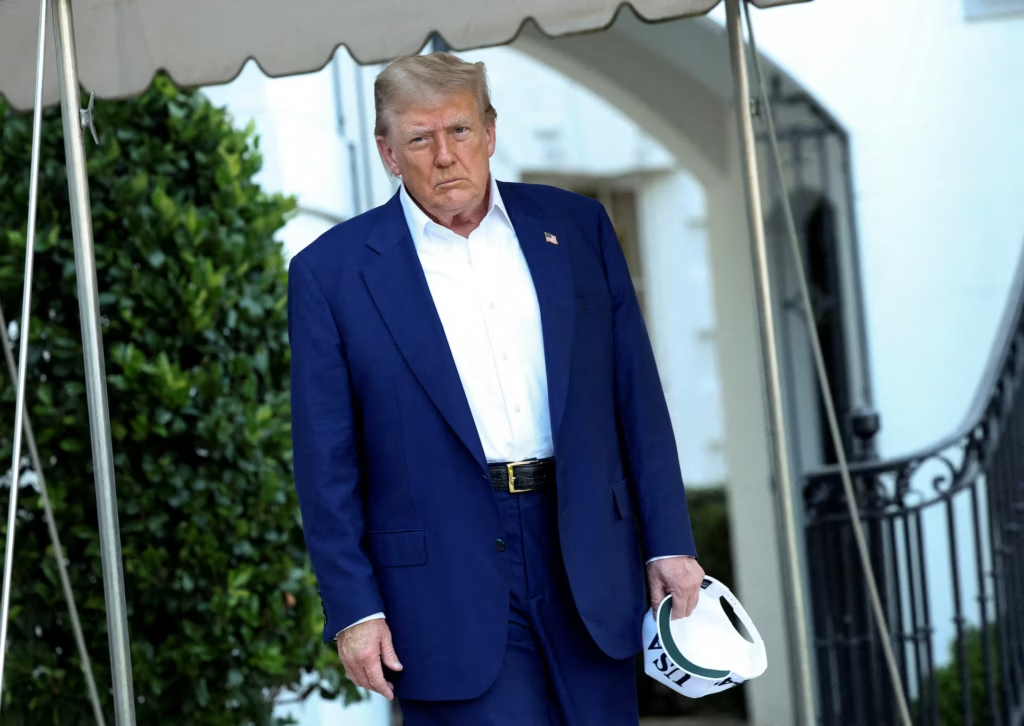
Trump departing to NATO Summit in The Hague.
Photo: Reuters.com
At the summit, President Trump advocated for NATO members to increase their defense spending to 5% of GDP, a significant rise from the current 2% target. This proposal includes 3.5% for core defense spending and an additional 1.5% for related areas like cybersecurity and aid to Ukraine.
However, this ambitious target has faced resistance from several member states. Notably, Spanish Prime Minister Pedro Sánchez criticized the goal as “unreasonable,” warning it would harm economic growth, social welfare, and investments in key sectors like education and technology.
In light of the U.S.’s uncertain stance, European nations are reassessing their security strategies. NATO Secretary-General Mark Rutte has emphasized the need for Europe to take greater responsibility for its defense, suggesting a shift towards a “European pillar” within NATO. This approach aims to reduce reliance on the U.S. and ensure the alliance’s continuity in the face of potential U.S. disengagement.
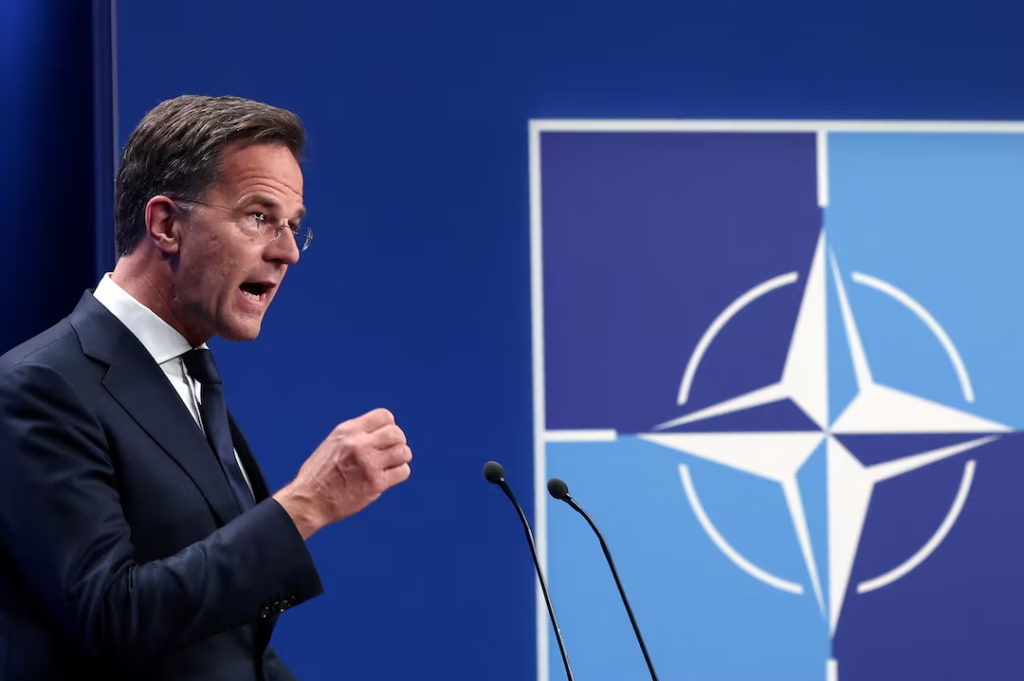
NATO Secretary-General Mark Rutte addresses the press ahead of the summit in The Hague.
Photo: REUTERS/Yves Herman
The uncertainty surrounding NATO’s future could have profound effects on global economic alliances:
- Shifts in Trade Partnerships: Countries may seek new economic partnerships outside the traditional Western bloc, potentially strengthening ties with China and other non-NATO nations.
- Investment Realignments: Investors might reconsider their portfolios, moving away from markets perceived as less secure due to weakened defense commitments.
- Economic Decoupling: Nations may pursue economic decoupling from the U.S., as seen in recent agreements between Japan, South Korea, and China to counter U.S. tariffs and financial pressure.
Source: World Bank
President Trump’s recent comments at the NATO summit have introduced a level of uncertainty into the alliance’s future. As NATO members navigate these challenges, the global economic landscape may experience shifts in trade, investment, and strategic partnerships. The coming months will be crucial in determining whether NATO can adapt to these changes and maintain its role as a cornerstone of Western security and economic cooperation.
Sources: The Economist, Reuters, World Bank
Update 06/25/25:
At the June 2025 NATO summit in The Hague, all 32 member states endorsed a historic national defense overhaul, committing to allocate 5 percent of their GDP annually to defense by 2035. This includes both frontline military capacity at 3.5 percent and broader security infrastructure at 1.5 percent. The agreement is seen as a clear success for President Trump’s push and was labeled “transformational” by Secretary-General Mark Rutte. Spain negotiated an opt-out, limiting its contribution to around 2.1 percent, while Greece and Canada pledged to pursue the full target.