
In early June 2025, a dramatic escalation unfolded between Iran and Israel. Israeli airstrikes struck Iranian nuclear sites and military infrastructure, prompting retaliatory missile barrages aimed at Israeli civilian and military targets. This post explores the causes, international fallout, and geopolitical implications of this confrontation.
Tensions between Iran and Israel have intensified significantly in recent weeks. Israeli airstrikes targeted key Iranian nuclear facilities and military installations, an effort to delay or dismantle Tehran’s nuclear program. In response, Iran launched a series of ballistic missile attacks, one of which reportedly struck Soroka Hospital in Beersheba. These exchanges resulted in dozens of casualties on both sides and prompted widespread concern over the potential for a full-scale regional war. Despite internal unrest and economic pressure, the Iranian regime remains firmly in control. The roots of this conflict are deeply entrenched, but the latest flare-up is widely viewed as the most serious escalation in over a decade.

Airstrike locations in Iran and Israel. Credit: CNN.
Global markets reacted quickly: safe-haven assets like gold and the US dollar surged, while equities fell as investors priced in the risk of broader conflict. Meanwhile, U.S. leadership, particularly former President Trump, has hinted at possible military support for Israel. The UN, EU, China, and Russia have urged diplomatic restraint, warning that a broader war could severely destabilize the Middle East.
Although Israel currently maintains air superiority, analysts note that its air campaign alone may not be enough to fully dismantle Iran’s entrenched nuclear infrastructure, especially without U.S. military involvement. Critics caution that regime change in Iran remains unlikely without a ground invasion. However, such an outcome could backfire, and Iran’s Revolutionary Guard remains a potent force capable of provoking deeper conflict.
The conflict has significantly altered the strategic landscape in the Middle East. Iran’s network of regional allies, including Hezbollah and Hamas, has suffered major setbacks as Israeli forces intensified operations against proxy groups. The disruption of this alliance structure weakens Iran’s ability to project power beyond its borders. In global energy markets, oil prices surged over 7% amid fears of supply disruptions through the Strait of Hormuz, a key chokepoint for global oil shipments. Diplomatic efforts have also stalled, most notably, nuclear negotiations between Iran and the United States have been suspended indefinitely. The United Nations has expressed serious concern about the safety of nuclear infrastructure, highlighting the broader risks of escalation in a region already fraught with instability.
The ongoing conflict between Iran and Israel marks one of the most volatile flashpoints in recent Middle Eastern history. With both nations demonstrating military capability and political resolve, the risk of further escalation remains high. International actors, including the United States, the United Nations, and the European Union, are calling for restraint, but a sustainable diplomatic resolution remains elusive. Monitoring developments in military engagement, diplomatic interventions, and economic repercussions will be essential in the coming weeks.
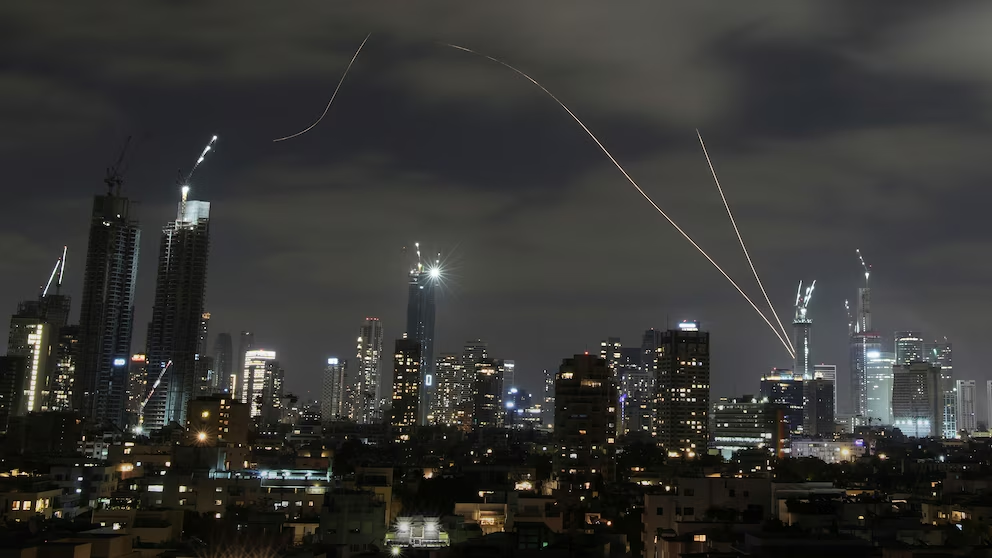
Iranian Missiles striking Tel Aviv, Israel. Credit: ABC News.